Posts

Image
Meet Me at the Old Chuckwagon Milton Avenue I was raised on westerns, and my first sight of real horses was when the "Arabbers" came through the alleys selling topsoil and fresh produce. They sang out street vendor songs and walked beside horses that were either ponies or slightly larger. Often they would be pintos or piebalds. Once in awhile I saw a palomino, but chestnut came to be my favorite color in horses, so when I watched the westerns I learned to distinguish the colors somewhat. With a black and white television in the early sixties, it was not so easy to see anything other than the limited chiaroscuro of our 19 inch RCA. My uncle Ronnie was a self-made film expert, and he helped bolster my early accumulation of westerns watched, if I can take the time to name a category. My father's favorite was "Shane," and I have it on DVD in my collection. Every now and then I pull it from the shelf to try to figure why my father called it his favorite. I hav...
Image
MARYLAND PENITENTIARY "Central Booking" East Baltimore February 11, 2011 Central Booking is what the Maryland Penitentiary has come to be known, and it is the oldest prison in the western hemisphere still in daily operation. You can reach it by driving west on Madison Street from Johns Hopkins hospital, which sits in the middle of an old black neighborhood and up the street, so to speak, from Dunbar High School, named for Paul Laurence Dunbar, the great African American poet who wrote the line "I know why the caged bird sings..." which inspired the title of Maya Angelou's incredible autobiography. Jail, as we call Central Booking or any of the other "correctional" institutions in Baltimore, is full of black men, and in my sixtieth birthday year I am given to looking back over my life from this point to the black men I have known. I am not alone among black men from poor and working class urban backgrounds who can say they are survivors. In Bal...
Image
photo by Bill Larson taken at Austin Peay University Clarksville, Tennessee 2010 To the Heart of Things When I listen to people with terminal illnesses talk about the time they have left, it often takes me awhile to remember that I have had to deal with that, too. Maybe it's because I am fifteen years away from the diagnosis. I was forty-three years old, too young to expire according to many, not the least of whom was myself. However, people have died soon after they were born. People die at all ages, but I was busy doing stuff, as they say, when the diagnosis came and along with it the only solution, according to the doctors. They wanted to give me a new heart. I refused to be put on the waiting list. I wanted to try exercise, change of lifestyle, the geographic cure, and most of all, a return to my Taiji and all the related aspects of what we call Chinese medicine. But all that seems like chit chat. I think now of the place where I lived, an apartment on Philly's West...
Image
This was once the corner store across from Fort Worthington Elementary School East Baltimore circa 1957 I loved arithmetic so much that when the teacher announced it in the 4th grade I hollered out "Yippee!" Call me the king of nerds. My classmates helped me understand that it was inappropriate expression in the context of their ideas of classroom decorum. Mrs. Miller was our teacher, and she thought it was rather cute of me to express my enthusiasm for math class. She was a stern woman, and I only remember her as being tall and beautiful, a dark brown-skinned woman with a stately demeanor. She was a little mean, too. Many a knuckle got cracked with that wooden ruler she kept ready on her desk. Mrs. Miller was taken away unexpectedly, murdered by a man. I don't remember if it was her husband or boyfriend. I've always thought it was her boyfriend. Maybe so. With the exception of Mrs. Tang, a longterm substitute, all of our teachers were black. I rem...
Image
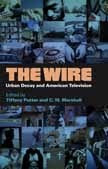
When We Tap “The Wire” A RESPONSE TO "OBAMA IN THE AGE OF THE WIRE" THE HARVARD PROJECT by Afaa Michael Weaver The Wire/Urban Decay and American Television edited by Tiffany Potter and C.W. Marshall is the first published collection of critical essays on the HBO program “The Wire.” The book includes an essay of mine entitled “Baltimore Before the Wire.” What follows here is my response to the project at Harvard University. In The Wire Collington Square Park is used to portray Marlo, an ambitious young drug dealer, in meetings with his guards and assassins. They stand on a knoll where Johns Hopkins hospital stands in the background. I know the park as the one adjacent to the school where my son and two youngest siblings attended the Head Start program in the seventies. As a poet who did his literary apprenticeship as a Baltimore factory worker, my life has taken me across the spectrum of the city covered in this television series that has gar...
Image
Paul Robeson 1993 The Year of the Rooster My 42nd Birthday Year Afaa Michael Weaver 蔚雅風 Wednesday July 14, 2010 Entering the place, it has the appearance of catacombs, the underground tombs constructed by ancient Romans. Each storage locker has a sliding aluminum door, either vertically or horizontally hinged. I have one of the largest. It's where I have kept and managed the accumulation of memories, bricks that assemble the past. When I lived in West Philadelphia, I had a locker in a company that was not as nearly well-kept as the one I have here in Somerville. Inspired by a colleague at Rutgers, I put all that I had accumulated up to that point in there for safekeeping. When I came out from the cardiac unit where I was treated for congestive heart failure in the summer of 1995, I returned to teaching at the Camden campus of Rutgers that fall. Walking was a precarious thing, and I was making my way up the hallway when a colleague urged me to take care of my things. ...
Image
THE WHITMAN THING (1819-1892) Afaa Michael Weaver 蔚雅風 June 8, 2010 Memorial Day on www.democracynow. org was celebrated with the posting of a video of a speech Noam Chomsky gave several weeks earlier on the subject of the need to revitalize radical reform energies in this country, and he made a comment that crystalized a few things I often toss around. For the last few years I have been working on a scholarly article about cultural intersections in the blues poetry of Marilyn Chin, and so I have been focusing on the latter nineteenth century, a fascinating and important time in American history. Chomsky said the deliberate criminalization of African Americans at that time was central to the rise in the American industrial revolution. Leaves of Grass appeared in its first edition in 1855, and ninety-nine years later, the Supreme Court issued the Brown decision, the most far-reaching and effective civil rights legislation in a history of the same going back into the nineteenth ce...